DFW New Construction Market November 2026: Starts, Builder Incentives and Prices
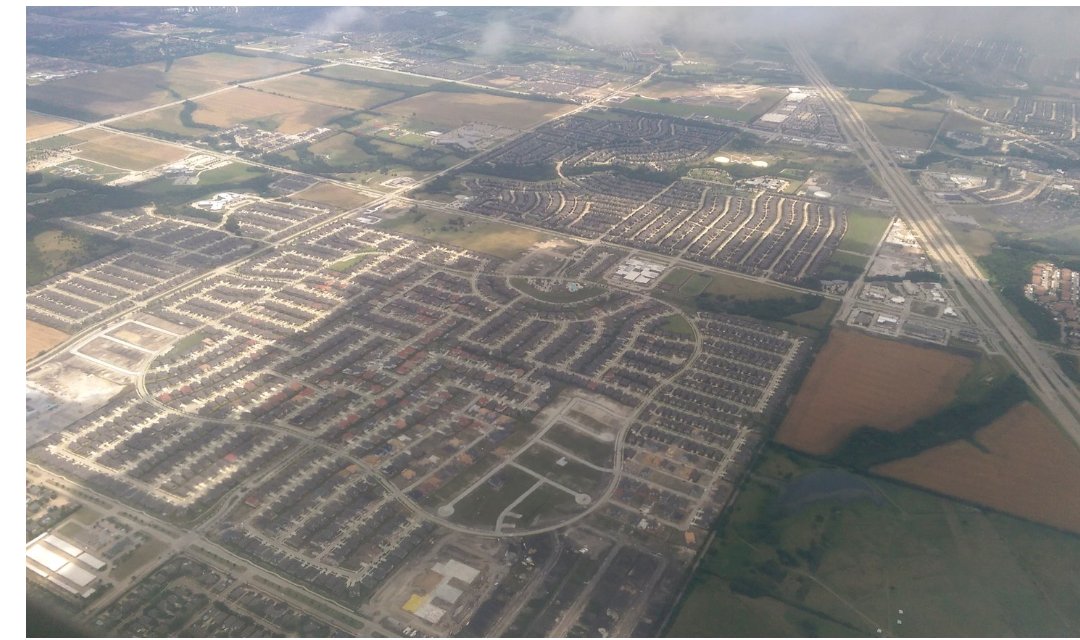
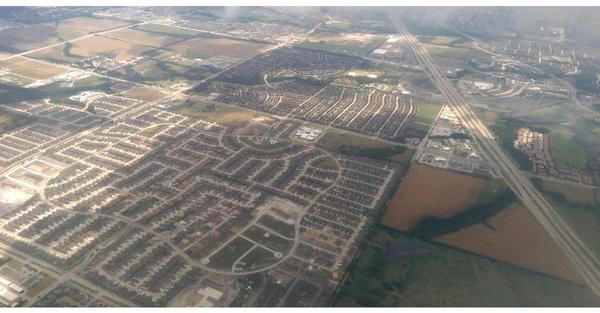
Photo: Dallas, Texas aerial view of suburbs by Alfred Twu, via Wikimedia Commons, CC0 1.0 Public Domain Dedication. Photographed August 2016 from an airplane; shown for illustration only, not a specific community or listing.
The DFW new construction market in November 2026 is a buyer-friendly, builder-pressured market. Builders are starting fewer homes, cutting prices and funding rate buydowns, while mortgage rates sit above 7%. This OnDemand Realty "New Construction Pulse" pulls the latest public numbers from the Census Bureau, NAHB, Zonda, the Texas Real Estate Research Center, Freddie Mac and builders' own websites. Every figure is labeled with its data period, and we checked builder incentive pages on November 27, 2026.
Key Takeaways
- Builders are pulling back. DFW single-family permits were 32,463 from January through October 2026, down 6.1% from a year earlier, and October alone fell 21.8% (U.S. Census Bureau via FRED).
- Discounts are common. In October 2026, MLS-listed new homes in DFW closed at an average of 93.5% of original list price after about 85 days, and closings fell 20.1% year over year (NTREIS MLS data as of October 31, 2026).
- Rates are the headwind. Freddie Mac's 30-year average was 7.21% on November 25, 2026, versus 6.23% a year earlier. NAHB builder confidence hit 25 in November, the lowest since April 2012.
- Incentives are everywhere, and many expire soon. Six builders we checked advertise buydowns or flex cash, with first-year rates from 2.99% to 4.99% and credits up to $50,000. Most end between November 30 and December 31, 2026.
- Compare the monthly payment. In our example, a permanent 1.5-point rate cut on a $400,000 loan saves about $394 a month, and a price cut would have to be roughly $58,000 to match it.
- Taxes change the math. Our calculated 2026 combined rates for four popular communities run from about 1.85% (no MUD or PID) to about 2.41% (with a management district).
What Is the DFW New Construction Market Doing in November 2026?
Short answer: it is cooling. Builders still produce more homes in DFW than in any other U.S. metro, but starts, permits and closings are all down from last year, and builders are paying to keep sales moving.
Here is the November 2026 snapshot, with the period for every number:
| Measure | Latest reading | Data period and source |
|---|---|---|
| DFW single-family permits | 32,463, down 6.1% year over year | January to October 2026, Census via FRED |
| DFW new-home starts (annual) | 38,833, down 13% | Zonda via Builder magazine, October 27, 2026 |
| DFW new-home closings (annual) | Down 15% | Same Zonda snapshot |
| MLS new-home closings in DFW | 1,566, down 20.1% | October 2026, NTREIS MLS data as of October 31 |
| MLS new-home months of supply | 5.1 months | October 2026, NTREIS MLS data |
| 30-year fixed mortgage rate | 7.21% | Week ended November 25, 2026, Freddie Mac |
| NAHB builder confidence | 25 | November 2026 |
| Metro median sale price, all home types | $379,000, down 1.6% | October 2026, MetroTex |
Why? Mortgage rates climbed again this fall, so affordability is the main constraint. Job growth is positive but slower: the DFW metro added about 43,100 jobs year over year as of August 2026, with 4.4% unemployment (Zonda via Builder). And developers put plenty of finished lots on the ground during the boom, so one land broker at Bisnow's November 10, 2026 Texas Residential Summit expects the land market to need about 18 months to rebalance.
Starts and Permits: Builders Are Trimming Production
Building permits are the cleanest public gauge of what builders plan to start. The Census Bureau's DFW-Arlington series, published by the Federal Reserve Bank of St. Louis (FRED) and last updated November 25, 2026, shows single-family (1-unit) permits slowing all year.
| Period | 2025 permits | 2026 permits | Change |
|---|---|---|---|
| Q1 (January to March) | 11,049 | 9,518 | -13.9% |
| Q2 (April to June) | 11,537 | 11,188 | -3.0% |
| Q3 (July to September) | 9,047 | 9,456 | +4.5% |
| October | 2,943 | 2,301 | -21.8% |
| January to October | 34,576 | 32,463 | -6.1% |
Source: U.S. Census Bureau, Building Permits Survey, DFW-Arlington metro, 1-unit structures, not seasonally adjusted, via FRED. Quarterly and year-to-date totals calculated by OnDemand Realty from the monthly values. Full-year 2025 was 39,362, down from 46,037 in 2024 (-14.5%, calculated from the same series).
At the same summit, Hillwood Communities' president said his firm's pipeline peaked around 60,000 starts in 2022, is on pace for about 38,000 in 2026 and may land near 35,000 in 2027. He noted that 2019 ran at a similar level and was "a good year." Today's pace looks like a return to normal after an unusually hot stretch, not a collapse.
Zonda adds that DFW builders are averaging roughly two sales per community per month, and that homes under $400,000 are 48% of new-home sales today versus 61% in early 2018.
National context (October 2026 Census data, released November 18): U.S. single-family starts were 864,000 at a seasonally adjusted annual rate, up 4.0% from September, a change within the margin of error. Single-family permits were down 12.9% from October 2025, and the South region's fell 9.7%.
One more number, with a caveat: Residential Strategies, the Dallas firm that tracks subdivision starts, was reported in press coverage to have counted 8,690 North Texas starts in the third quarter of 2026 (down about 4%) and about 10,628 finished, unsold new homes at the end of September, roughly a three-month supply. We could not open the original report, so treat both figures as press-reported.
New Construction vs Resale in DFW: October 2026 Numbers
The most useful comparison for most buyers is what a new home really sells for compared with a resale home. These figures come from NTREIS MLS data as of October 31, 2026. They cover homes listed in the MLS, not homes a builder sold without listing them, and they are averages rather than medians.
| Metric (October 2026) | New construction | Resale |
|---|---|---|
| Closed sales | 1,566 (down 20.1% year over year) | 4,552 (down 19.1%) |
| Active listings | 9,380 (down 4.6%) | 26,580 (down 5.0%) |
| Average list price | $555,020 | $525,470 |
| Average sold price | $466,400 | $458,600 |
| Gap between list and sold (calculated) | about $88,600 | about $66,900 |
| Sold price vs original list price | 93.5% | 93.4% |
| Average days on market | 85 | 66 |
| Months of supply | 5.1 | 5.8 |
Source: NTREIS MLS data as of October 31, 2026. Gap rows calculated by OnDemand Realty from the average list and sold prices.
A few things stand out. New homes are not much cheaper on average ($466,400 versus $458,600), but they take about three weeks longer to sell and show a bigger dollar gap between asking and closing price. The percentage discount from original list is nearly the same for new and resale, because many builders spend their money on rate buydowns instead of price cuts. New homes were roughly 26% of MLS closings in October (1,566 of 6,118, calculated), so new construction is a big slice of the market but a minority. For the whole metro, MetroTex reported 4.6 months of supply for October 2026.
A second dataset points the same way. The HomesUSA.com Texas New Home Sales Report (three-month moving averages of MLS data) put DFW at 1,657 new-home sales, an average sale price of $464,684 and 9,140 active new-home listings for October 2026. Its 97.48% sold-to-list ratio is higher than the 93.5% above because it measures against the final list price, not the original one. Always ask which price a statistic is measured against.
Builder Confidence, Mortgage Rates and Incentives
Rates. Freddie Mac's 30-year fixed averaged 7.21% on November 25, 2026, down from 7.28% on November 19 and up from 6.23% a year ago. The Associated Press reports it has been above 7% since late September and was about 7.4% in mid-October, a near three-year high. The survey covers conventional loans for borrowers with 20% down and excellent credit, so your own quote may differ.
Builder sentiment. NAHB's November 2026 index fell four points to 25 and buyer traffic fell to 16. NAHB says 46% of builders cut prices in November, the highest share since Covid, with an average cut of 6%, and 68% used sales incentives, also a post-Covid high. Zonda's October 2026 read: national new-home sales down 11.7% year over year, and incentives on 64% of to-be-built communities versus 83% on quick move-in homes (homes that can usually be occupied within about 90 days).
What the big public builders say. D.R. Horton, based in Arlington, reported fiscal fourth-quarter results (July through September 2026) on October 29: 22,915 homes closed and net income down 18%. Its release said "we expect incentives to remain elevated in fiscal 2027." On the earnings call, as summarized by GuruFocus, management said its buydowns average about 1.5 points below market and that a high-80s percentage of its mortgage company's buyers receive one. Lennar's quarter ended August 31, 2026 showed an average sales price of $372,000, which its release says reflects approximately 12.0% in incentives.
Builder incentives table (checked November 27, 2026)
We opened each builder's own promotion page on November 27, 2026 (Highland's offers were last checked November 21). Offers have fine print, require the builder's preferred lender in most cases, and apply to select homes only.
| Builder | Offer as posted | Key dates | Fine print to know |
|---|---|---|---|
| Beazer Homes | Rates as low as 2.99% (5.959% APR) during its National Sales Event | Through November 30, 2026 | Financing through Jet HomeLoans; select homes |
| Tri Pointe Homes | 1-0 buydown, first-year rate as low as 3.99% (5.842% APR), plus move-in package worth up to $5,477 | Contract by November 30, close by December 31, 2026 | Select move-in-ready homes at list price; Tri Pointe Connect; sample shows 4.99% in years 2 to 30 |
| Drees Custom Homes | 3-2-1 buydown: 4.25%, 5.25%, 6.25%, then locked 7.25% (7.348% APR) | Contracts November 23 to December 31, close by January 31, 2027 | Select quick move-in homes; First Equity Mortgage; sample uses a $700,000 price |
| M/I Homes | 2/1 FHA buydown: 3.25%, 4.25%, then 5.25% (6.036% APR) | Contracts on or after September 14, close by December 18, 2026 | Select quick move-in homes; M/I Financial; 3.5% down and 640 minimum credit score |
| Century Communities (Dallas division) | Up to $50,000 flex cash for price, rate buydown or closing costs, plus a move-in package valued at about $3,800 | Contracts November 4 to December 16, close by December 31, 2026 | Affiliated lender; incentive capped at 3% of price when tied to the lender |
| Highland Homes (last checked November 21) | "$20K Goes A Long Way": $20,000 with its preferred lender, $15,000 with others. Also 4.99% first year, 5.99% years 2 to 30 | $20K offer October 1 to December 31; rate offer contracts November 2 to December 2, close by December 30 | See our Highland Homes guide for details |
Notice how many of these are temporary buydowns (rates that step up after one to three years) and how few are price cuts. A temporary buydown lowers your early payments but not your permanent rate, so plan for the step-up.
What a rate cut is worth: an illustrative example
Our own math, using Freddie Mac's 7.21% as a reference: on a $400,000, 30-year loan, principal and interest is about $2,718 a month at 7.21%. At 5.71%, 1.5 points lower (the average D.R. Horton described), it is about $2,324, a savings of roughly $394 a month, or $4,725 a year. To match that payment with a price cut, the loan would have to shrink by about $58,000, roughly 14.5%. That is why builders favor buydowns. It is also why a buydown is not free: someone paid for it, and the contract price may be higher than it would be without the deal. An American Enterprise Institute analysis reported by HousingWire in November 2025 estimated a permanent buydown costs a builder about 3.2% of the price per full point, versus roughly a 10% price cut to match the payment. That research is a year old, and our numbers are examples, not quotes.
Where Builders Are Building: DFW Corridors and Tax Rates
The northern corridors dominate. Zonda says Collin County accounts for nearly 30% of DFW starts and Denton County just over 20%, and its top communities by annual closings include Painted Tree in McKinney, Legacy Hills in Celina, Lakehaven in Farmersville and Elevon in Lavon. For specific builders and neighborhoods, see our guides to Highland Homes in DFW, the Prosper ISD and our favorite 10 DFW builders.
Big builders hold most of the market. In Builder magazine's 2026 Local Leaders list (2025 closings), D.R. Horton led DFW with 7,058 closings (17.3%), followed by Lennar with 5,724 (14.1%) and Green Brick Partners with 3,196 (7.8%). The top 10 held 63.0%.
Property taxes vary a lot by community, and new areas often carry a MUD (municipal utility district) or PID (public improvement district) on top of regular taxes. A MUD is a political subdivision that finances water, sewer and drainage with bonds repaid by district property taxes. A PID is billed as a fixed annual assessment. Texas law requires sellers in a MUD to give the buyer a written notice before the contract is signed (TREC Form 59-0 is available when the district has no notice of its own), and TREC has a separate addendum for improvement district assessments (Form 53-0).
| Community | Area | Special district | Combined 2026 rate (calculated) | Example annual tax at $500,000 taxable value | Monthly with $140,000 school homestead exemption |
|---|---|---|---|---|---|
| Aster Park | McKinney (Prosper ISD) | None (no MUD or PID) | 1.846% | $9,230 | $554 |
| Star Trail (Collin side) | Prosper (Prosper ISD) | None (no MUD or PID) | 1.939% | $9,694 | $582 |
| Sandbrock Ranch | Aubrey area (Denton ISD) | Denton County MUD No. 6 | 2.236% | $11,181 | $671 |
| Pecan Square | Northlake (Northwest ISD) | Northlake MMD No. 1 | 2.407% | $12,036 | $722 |
Rates are 2026 adopted rates per $100 of taxable value from the Collin County Tax Assessor-Collector and Denton County rate tables, combined by OnDemand Realty as of November 21, 2026. Examples subtract only the school district homestead exemption of $140,000 and ignore other local exemptions and your actual appraised value. Ask your agent for the exact rate and any PID installment for your lot.
Two timing notes. Texas appraisal districts value property as of January 1, so a home finished after that date may be taxed on land plus partial construction in year one, and the first full bill can be higher. And your homestead exemption only starts after you own, live in the home and apply.
What the DFW New Construction Market Means for Buyers
If you are buying, this is one of the better negotiating windows in several years, and it has a deadline. Many incentives expire between November 30 and December 31. Several offers also require closing by mid to late December, so timing matters.
- Ask which homes are finished and ready now. Completed, unsold homes cost builders money every month, so that is where concessions tend to be largest.
- Compare payment, not just price. Get two written quotes: one with the builder's lender and incentive, one with your own lender and the biggest price reduction the builder will give. Include taxes and any MUD or PID.
- Check the step-up date. With a 2-1 or 1-0 buydown, know the full-rate payment and when it starts.
- Think about resale. If you may sell within three to five years, the contract price is what the next buyer's appraiser will see. A rate deal helps your payment, but a lower price helps your equity.
- Do not skip your own inspections. New does not mean flawless. Inspections at key stages are inexpensive protection.
What It Means for Sellers Competing With Builders
If you are selling a resale home near a new community, you are not just competing with your neighbors. You are competing with a builder who can offer a rate buydown, a move-in package and a brand-new roof. A few ways to compete:
- Price to the sold numbers. Resale homes in October 2026 sold at about 93.4% of original list price after about 66 days. Pricing at the first-day market value matters more than a hopeful list price followed by cuts. Our guide to the seller mistakes to avoid before listing walks through the most common ones.
- Offer a payment, not just a price. A seller credit can fund a buyer's rate buydown. Limits depend on the loan program and down payment, so check with a lender first. Our seller-paid 2-1 buydown guide shows the math.
- Sell what a new home cannot. Mature trees, a larger lot, a finished street with no construction next door and, often, no MUD or PID. Put those in the first line of your listing.
- Spend where buyers notice. A refresh can narrow the gap with a model home. See our guides on whether to renovate before selling and what it costs to sell a house in Texas.
- Watch the supply timeline. Fewer starts today can mean fewer finished homes next spring if buyers return faster than builders do. Nobody knows how rates will move, so do not bet the sale on it.
How to Buy New Construction in DFW: Step by Step
- Get pre-approved, and get a second lender quote. Ask the builder's lender and an outside lender for loan estimates on the same home. Compare rate, points, closing costs and the cost of any buydown.
- Pick your corridor and school district. Tax rate, ISD, commute and MUD or PID status vary by community. Our Plano and McKinney updates show resale prices for comparison.
- Register your agent at the first visit. Have your agent's name on the builder's registration paperwork before you tour.
- Choose quick move-in or to-be-built. Quick move-in homes close sooner and often carry bigger incentives. To-be-built homes allow more customization but mean a longer timeline and more rate risk.
- Read the contract carefully. Builders often use their own contract. TREC also publishes new home contracts, form 23-20 for incomplete construction and 24-20 for completed construction, both effective July 1, 2026. Have your agent or an attorney review deposits, delay clauses and what happens if appraisal or financing falls short.
- Collect the notices. Ask for the MUD notice (TREC Form 59-0 or the district's own), any PID assessment addendum (Form 53-0), HOA documents and the survey.
- Inspect at each stage and do a thorough final walk. Make a punch list and get it in writing with a completion date.
- Get the warranty in writing. Ask what it covers, for how long and how to file a claim. Terms vary by builder.
- Plan for year one. File your homestead exemption and budget for landscaping, window coverings and fencing, which are often extra.
What to Watch Next
Freddie Mac posts rates each Thursday. Census releases November construction data on December 17, 2026, NAHB publishes its December index in mid-month, and full-year 2026 starts from Residential Strategies and Zonda arrive in early 2027. Most posted incentives expire November 30 to December 31, 2026, so watch for refreshed offers in January.
Frequently Asked Questions
Are new-construction homes cheaper than resale in DFW right now?
Not on average. In October 2026, MLS data showed new homes at an average sold price of $466,400 versus $458,600 for resale. The difference is negotiating room: new homes carried a bigger dollar gap between list and sold price, and many builders are paying for rate buydowns. Compare monthly payment, taxes and what is included.
Is it a good time to buy a new home in DFW?
It is a good time to negotiate. Builder confidence is at a 14-year low, 46% of builders nationally cut prices in November 2026, and DFW builders are advertising buydowns and credits. Rates above 7% are still a real hurdle, so run the numbers and know what your payment is when a temporary buydown ends.
What is the difference between a MUD and a PID?
A MUD is a utility district that issues bonds for water, sewer and drainage, repaid with district property taxes on your bill. A PID usually bills a fixed annual assessment for infrastructure. Either can add hundreds of dollars a month, so ask for the written notices before you sign.
Do builders really negotiate on price?
Many do, often through incentives rather than list price. DFW new homes sold at an average of 93.5% of original list price in October 2026. Ask for any concession in writing and compare a rate buydown with a price reduction. Offers tied to the builder's lender may shrink if you use an outside lender.
Should I use my own agent when buying from a builder?
Yes, and register them at your first visit. The sales counselor works for the builder. An agent who represents you can compare communities, review the contract and addenda, push for incentives in writing and keep the closing on track. Builder policies vary, so confirm the terms in writing.
Sources and Further Reading
- U.S. Census Bureau, New Residential Construction, October 2026, released November 18, 2026
- Federal Reserve Bank of St. Louis (FRED), DFW-Arlington 1-unit building permits, updated November 25, 2026
- Freddie Mac, Primary Mortgage Market Survey, November 25, 2026; Associated Press, mortgage rate report
- NAHB, November 2026 builder sentiment release
- Zonda, New Home Market Update, October 2026; Builder magazine, Dallas Market Snapshot (October 27, 2026) and 2026 Local Leaders, Dallas-Fort Worth-Arlington
- Bisnow, DFW Land Market Braces for Slowdown After 5-Year Development Boom (November 11, 2026)
- Texas Real Estate Research Center, October 2026 NTREIS Monthly MLS Summary; MetroTex October 2026 report coverage; HomesUSA.com Texas New Home Sales Report, October 2026
- D.R. Horton, fiscal fourth quarter 2026 results; GuruFocus, earnings call highlights; Lennar, third quarter 2026 results
- Builder promotions: Beazer Homes Dallas, Tri Pointe Homes, Drees Custom Homes, M/I Homes, Century Communities, Highland Homes DFW
- Texas Real Estate Commission, contract forms; Texas Real Estate Research Center, Clear as MUD; Texas Comptroller, property tax basics
- HousingWire, Are mortgage buydowns a lifeline or a risk for new homebuyers? (November 26, 2025)
Related Reading From OnDemand Realty
- Highland Homes in Dallas-Fort Worth: New Communities, Tax Rates and Incentives (November 2026)
- NextGen Homes in DFW 2026: Multigenerational and In-Law Suite Homes
- Our Favorite 10 Home Builders in Dallas-Fort Worth (2026)
- Seller-Paid 2/1 Buydown: Worth It? Pros, Cons and Math
- McKinney Housing Market Update November 2026
- Plano Housing Market Update November 2026
Thinking About Buying New or Selling Against a Builder?
OnDemand Realty can help you compare builders, read the fine print on incentives and price your resale home against the new homes nearby. Start at www.ondemanddfw.com.
Disclaimer: This article is for general information only and is not legal, tax, lending or financial advice. Market figures come from the third-party sources linked above for the periods stated and may be revised. NTREIS MLS statistics include only homes listed in the MLS, so total builder sales are higher. Builder incentives were read from builders' public pages on November 27, 2026 (Highland on November 21) and change often; confirm every offer, rate and deadline in writing with the builder and your lender. Payment, tax and buydown examples are illustrative calculations by OnDemand Realty, not quotes or offers. Confirm taxes, MUD and PID details and contract terms for a specific property with your agent, a lender and a qualified professional.
Categories
Recent Posts